Scroll of Reactions
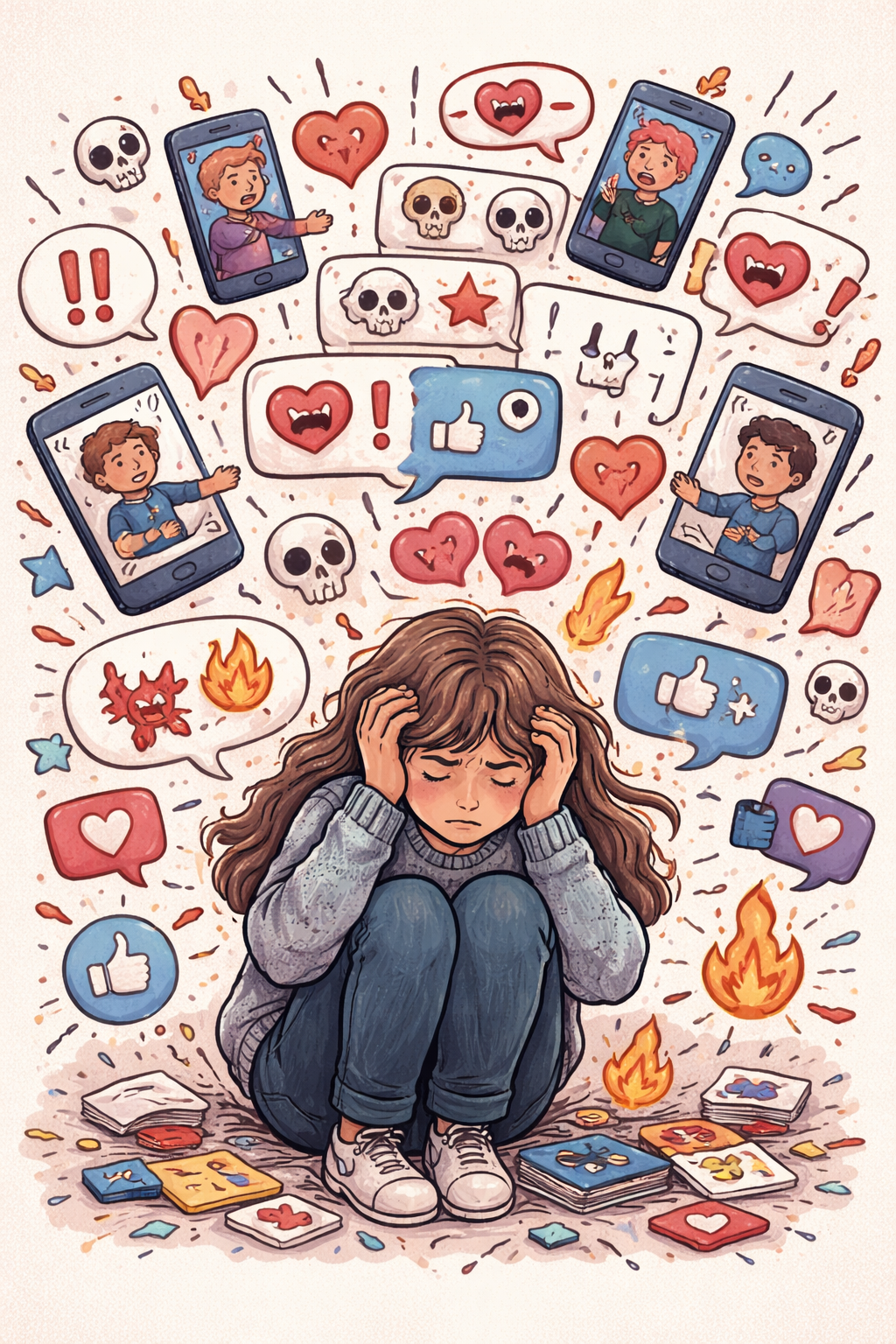
Social media gives me anxiety, especially after a newsworthy event that is often controversial in nature. What’s upsetting isn’t the news itself—it’s the arguments that seem to disregard people’s feelings and, at times, even basic care for the lives and dignity of others.
So when a newsworthy event occurs, I’ve learned not to go to social media.
I often hear people say, “Well, I need to be informed and know what’s going on.” Here’s my argument against that: The event itself you can learn about through a simple alert. For example: “Patriots beat the Broncos 10-7 in the AFC Championship game.” That happened. That’s the event. That’s information.
But when the discussion turns to whether Sean Payton should have kicked a field goal instead of going for it on 4th and 1, you’re no longer consuming news—you’re consuming opinions. And for me, opinions aren’t the event. Those opinions quickly degrade into name-calling, and in some cases, God is even brought into the scenario. Reading this over and over again isn’t informative; it’s exhausting.
Now, I’m using sports as a neutral topic to make a universal point, but this pattern is everywhere on social media. The constant updating of opinions, videos, and increasingly hyperbolic statements isn’t healthy for me, and I wonder if it’s healthy for those involved either.
Is it possible to make different choices? It is. When I get home, I take my dog for a walk. I sit on the couch. And instead of picking up my phone to check social media, I review my day. There’s enough directly anxiety-inducing situations to work through in our actual lives, and I’m realizing that I need to protect myself from the manufactured anxiety of endless commentary.
What about you? Have you found yourself caught in the scroll of reactions rather than simply learning the news? What would change if you distinguished between what actually happened and what everyone thinks about what happened